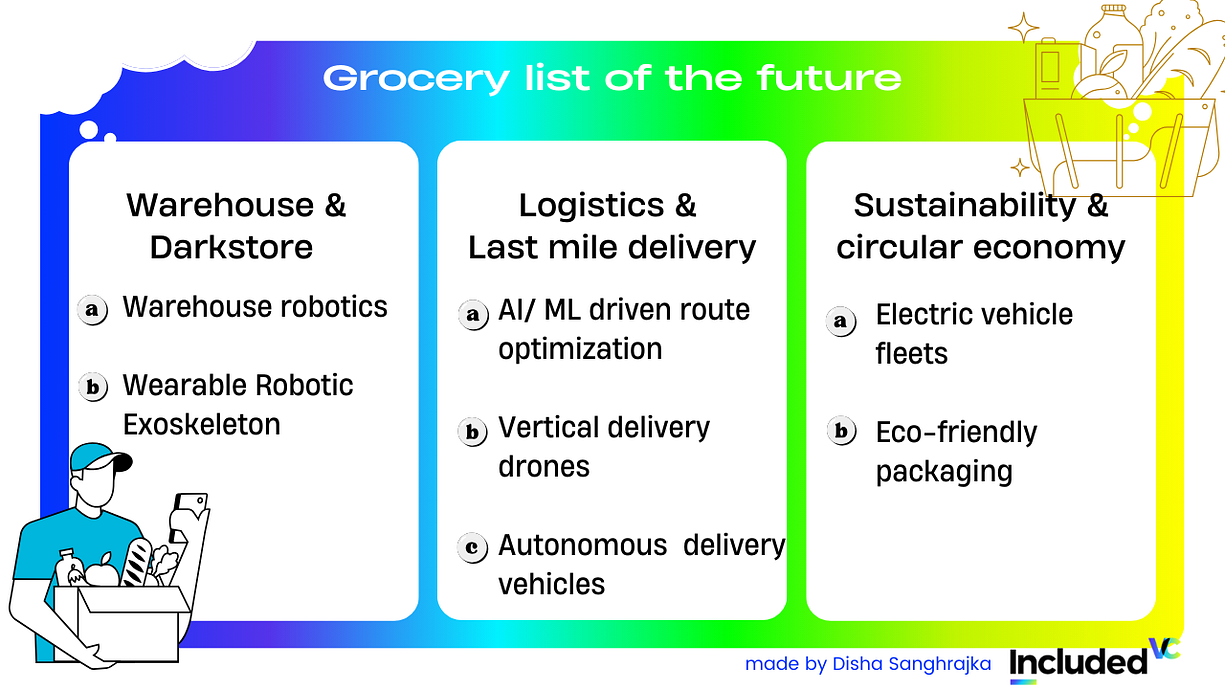
From quick-commerce to warehouse robotics to electric fleet to delivery drones, every leg of online food delivery is evolving
Deliveries are happening from the sky, and warehousing robots are packing your orders. Need a missing ingredient? It can be at your doorstep before the water starts boiling. Speed and convenience are part of everyday life in certain parts of the world.
Hyperlocal delivery models failed in India in 2016 due to poor unit economics (TinyOwl, Foodpanda, PepperTap, Flipkart’s Nearby, Grofers). However, its reincarnation as an inventory-led model in 2021 tasted instant success. We witnessed the rapid transformation of the e-grocery market — from next-day delivery to an astonishing 10-minute delivery (i.e. Quick commerce). The consumers questioned the need for instant delivery, and experts believed the fad would disappear after Covid.
I saw the quick commerce space closely when I advised on the acquisition of Blinkit (the largest e-grocer in India) by Zomato (the largest food aggregator in India). Blinkit is now valued more than its acquirer; its valuation has grown from $568 million in August 2022 at the time of acquisition to $13 billion as of last valuation available! (26x MOIC in 2 years).
Quick deliveries now has become the primary grocery shopping method for 31% of urban Indians, with 39% using it for top-up purchases. Amazon Tez and Flipkart Minutes enter 10-minute deliveries. Blinkit is in talks with Pharmeasy about selling medicines in 10 minutes. Swiggy Volt is disrupting India’s tier II/III cities with rapid deliveries.
It costs £0.3 to deliver a package in India within 15 minutes vs £4.00 within 60 minutes to deliver the same in United Kingdom. The dark store enabled 15-minute delivery model is unthinkable in Europe! Ultra-fast deliveries work in some countries but have failed in others -Gorilla, Europe’s largest e-Grocer went down.
Globally, every country is seeing consumption growth through online delivery models, be it click-and-collect or delivery at doorstep. Ocado’s grid system in the UK enables thousands of robots to travel over a grid, picking and packing an order of 50 SKUs in just five minutes — a task that would take a human worker over ten times longer. Food delivery by a drone out of the sky is just regular life in Shenzhen.
TL;DR
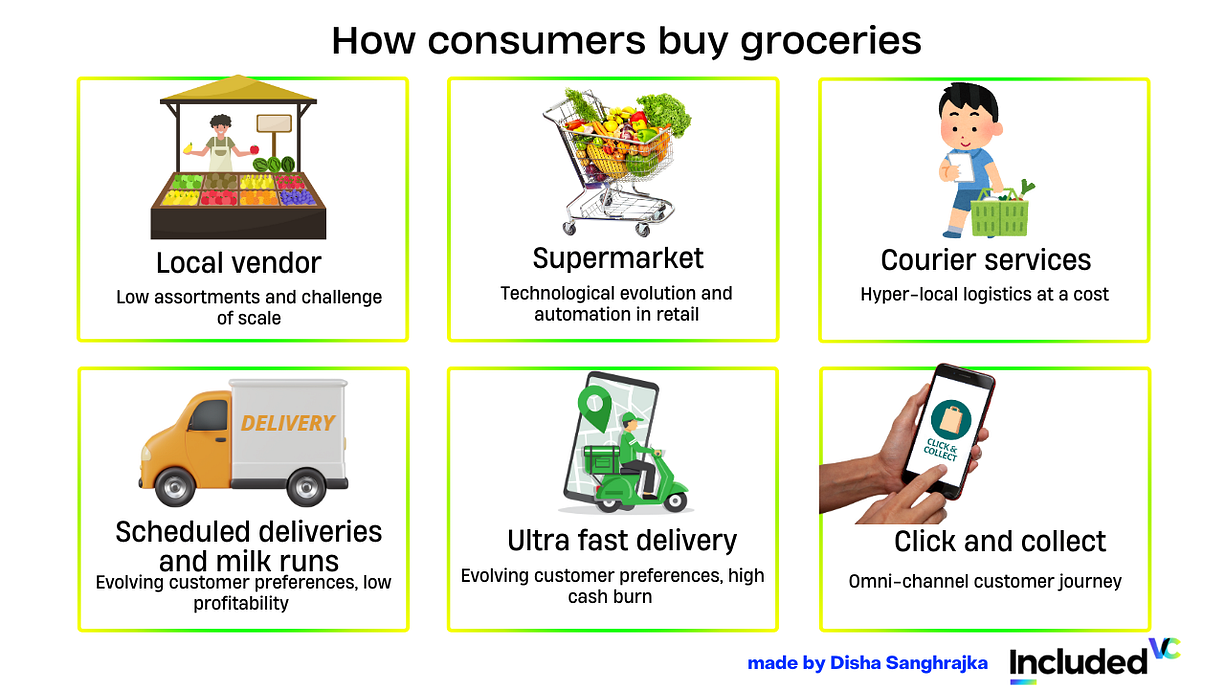
Having interviewed consumers across 20 countries, I’ve observed striking parallels and contrasts. People cook meals in every country, but they value different things. It could be speed, convenience, quality, variety, cost or consumer experience.
But it is clear that there are three ways in which consumers in every country buy their grocery and essentials — online, offline or a mix of both. What do you prefer?
Personally, I find the smell, color, and feel of fresh produce, meat, and cheese in a supermarket or a farmers' market to be meditative. I enjoy strolling through grocery aisles, uncovering healthy gourmet products.